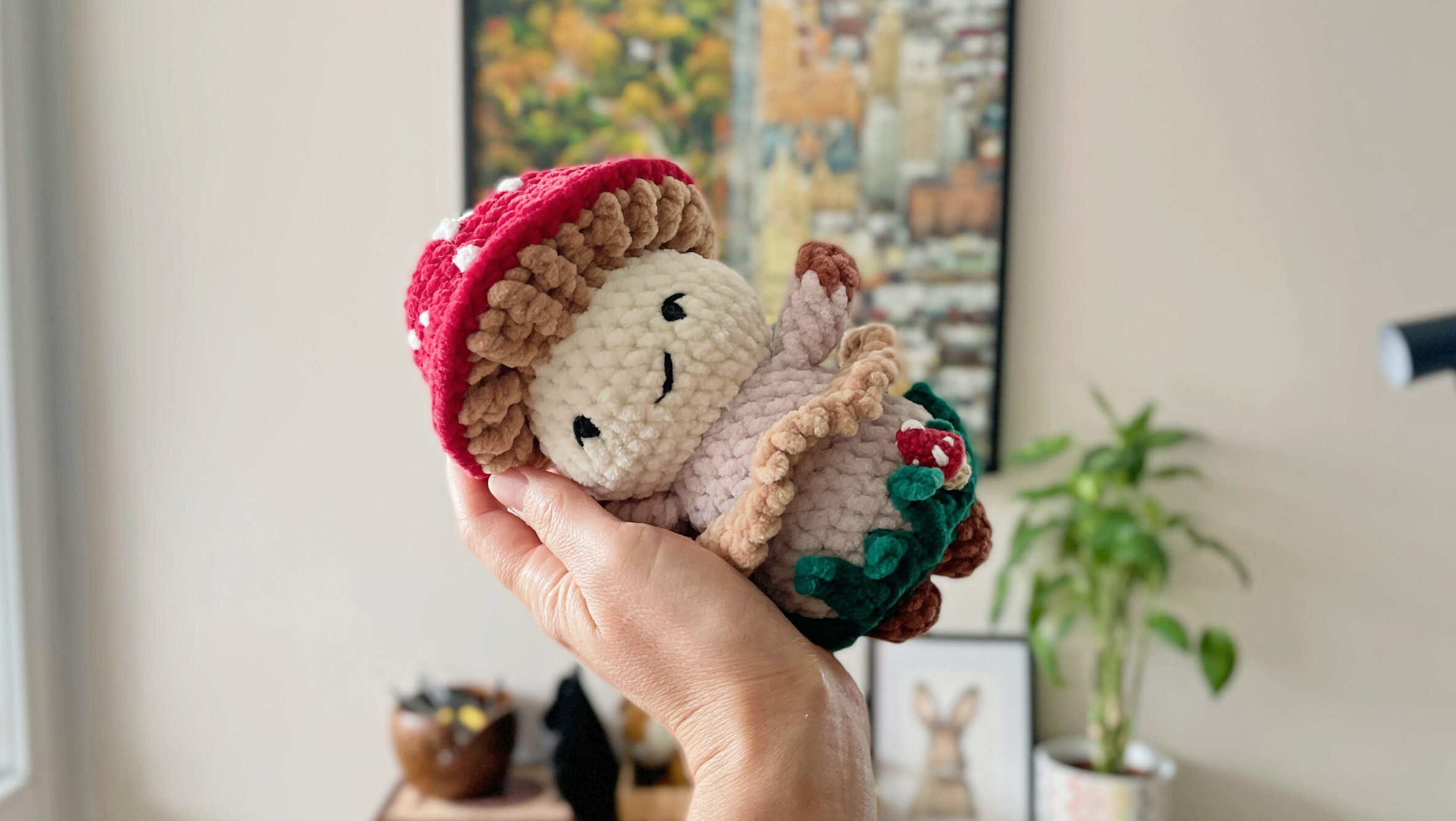
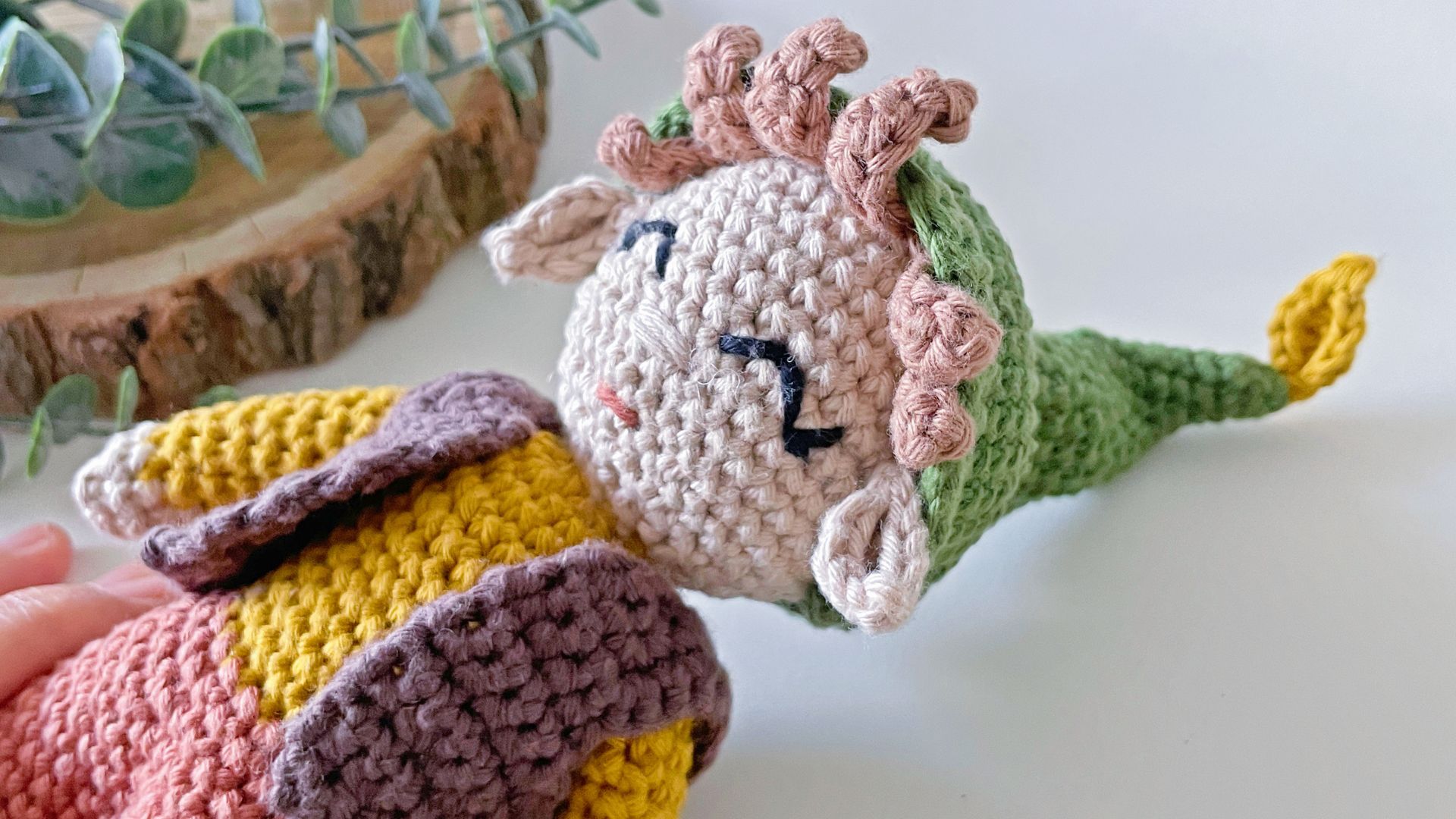
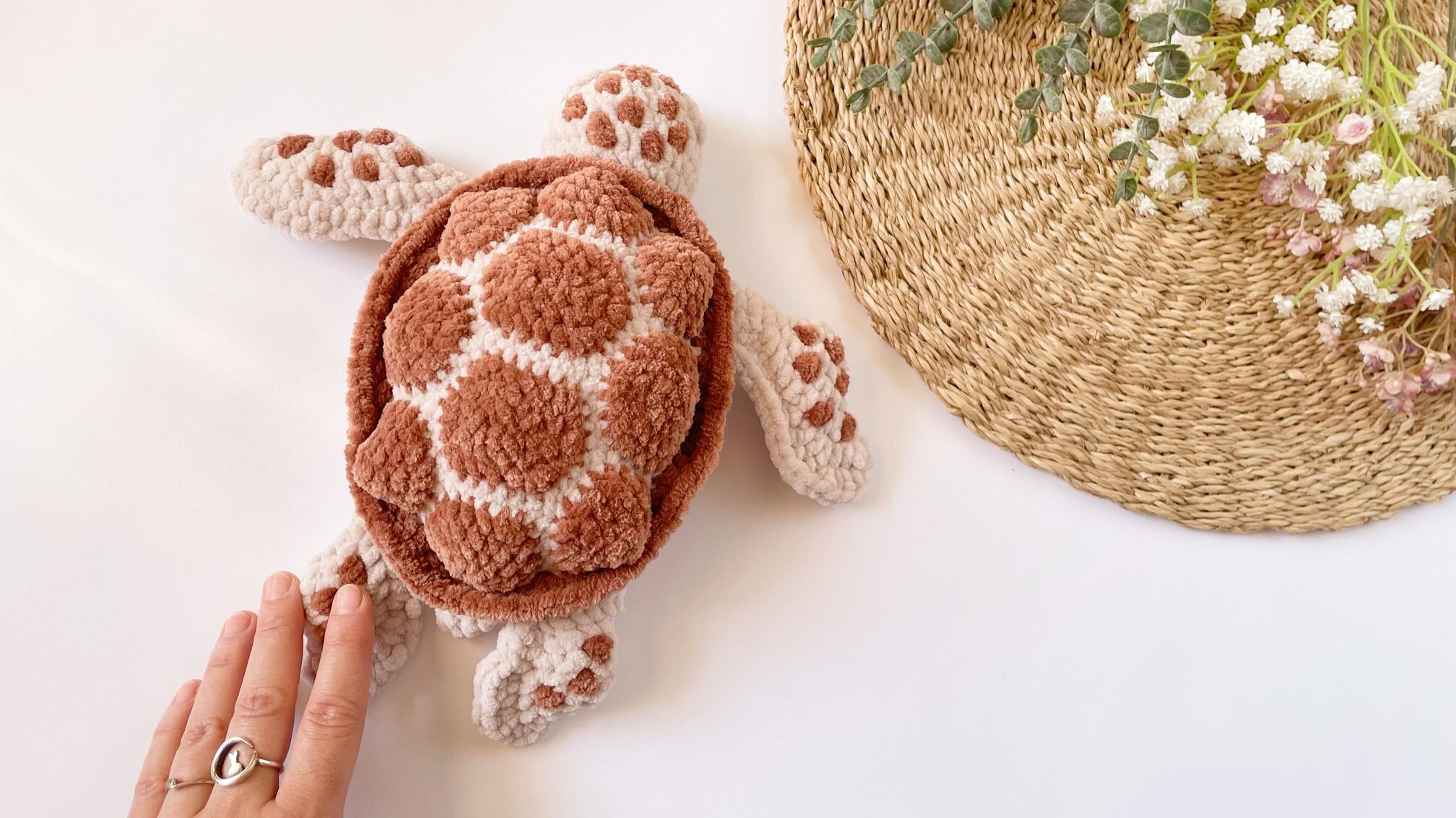
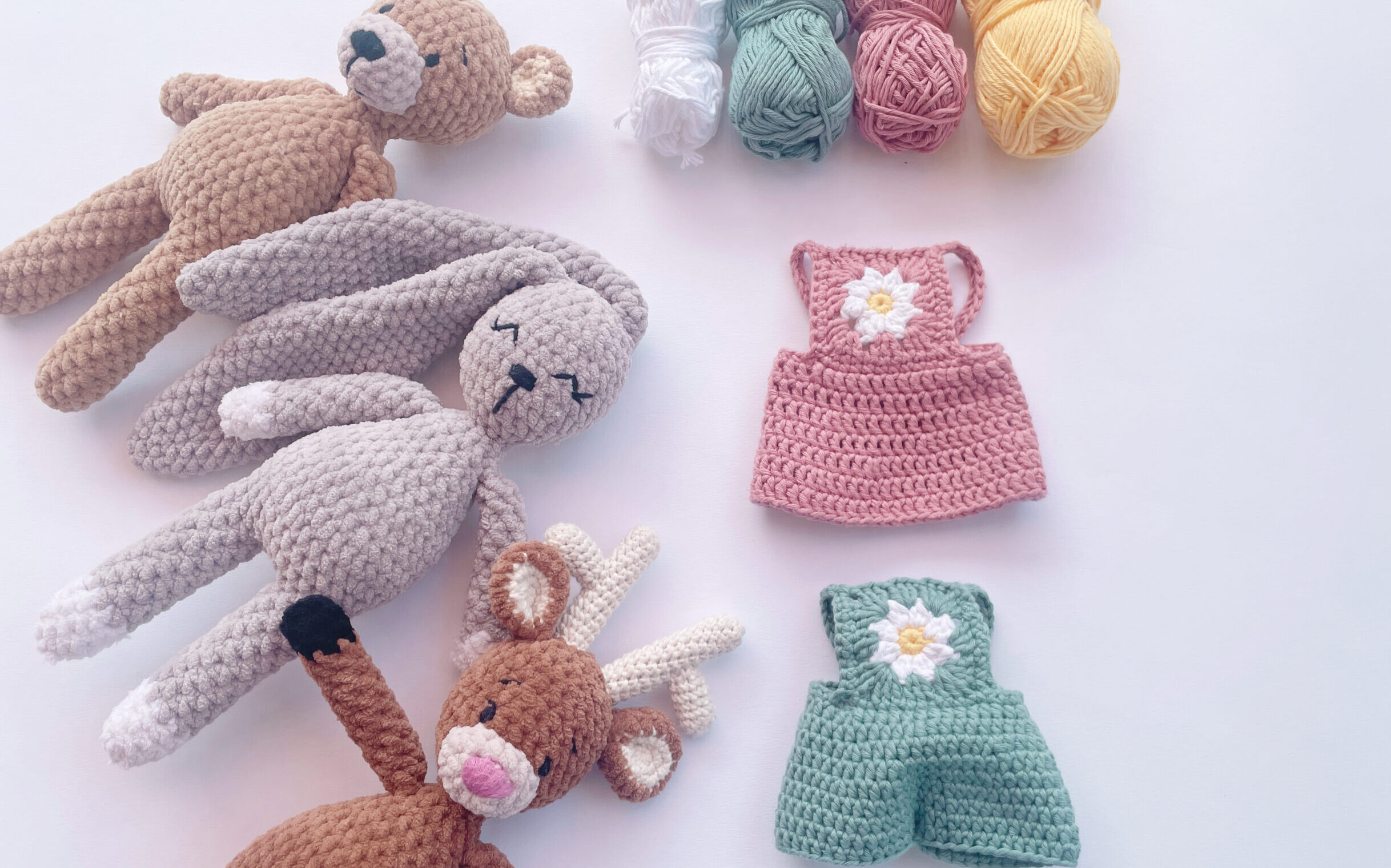
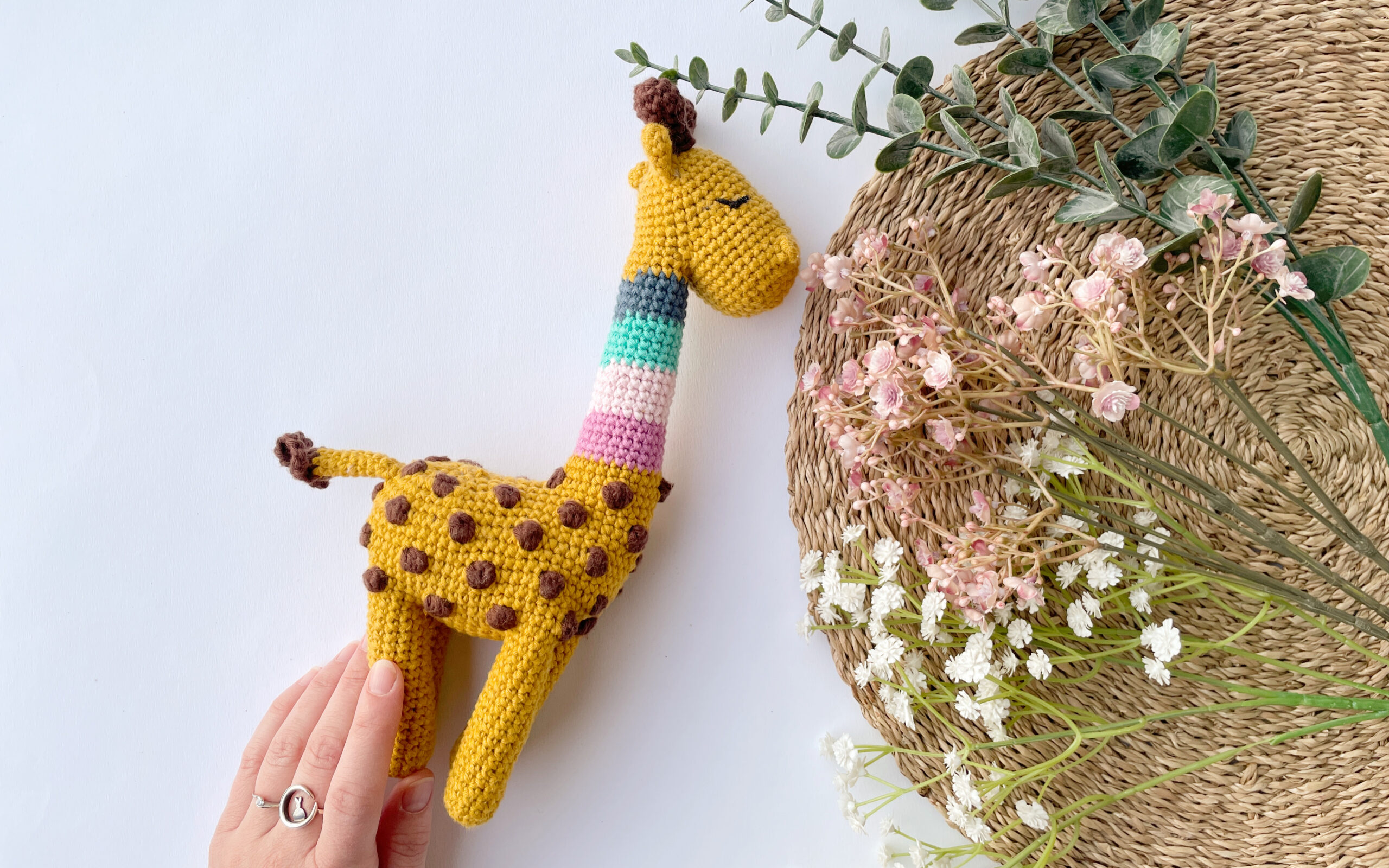
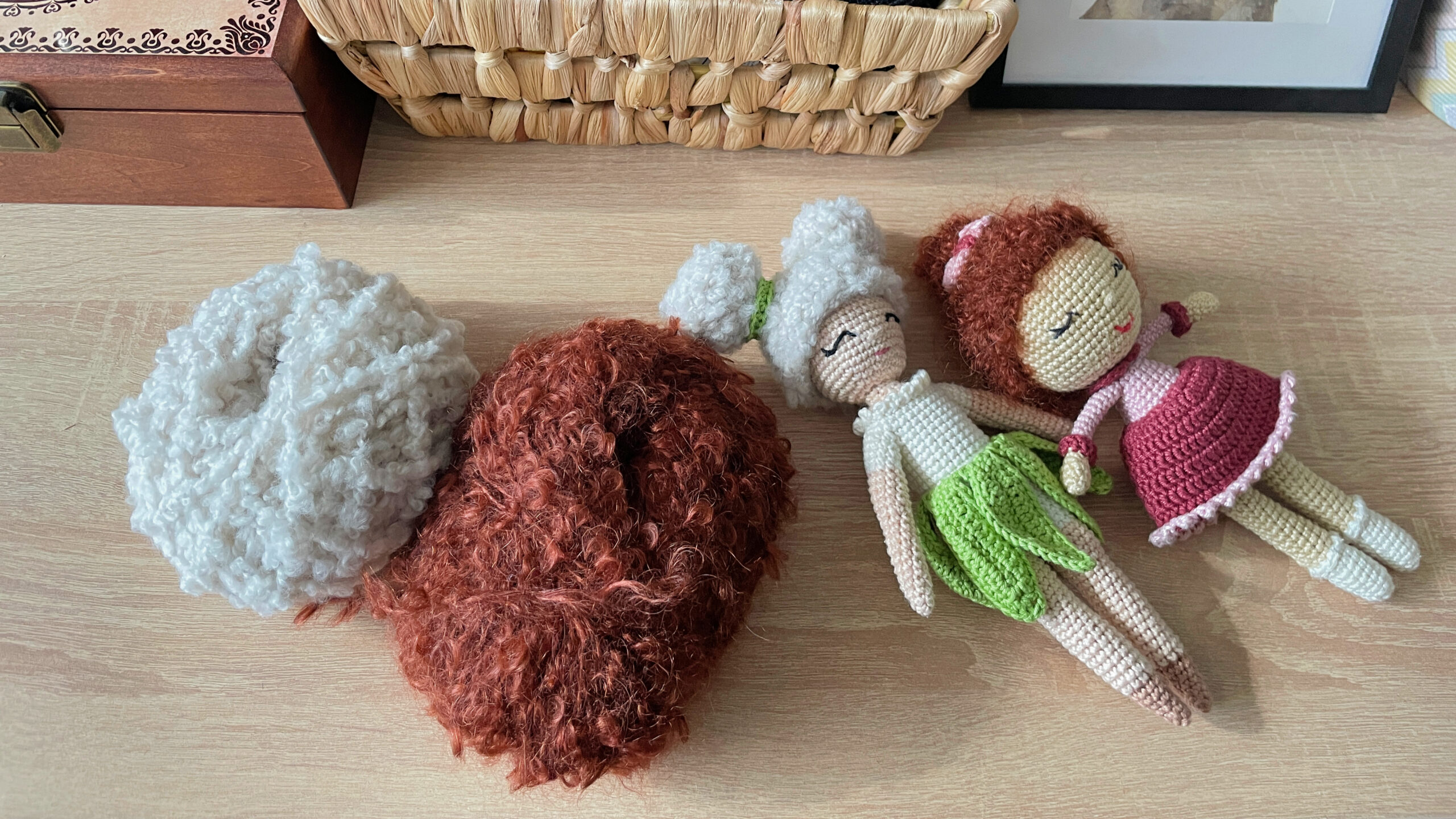
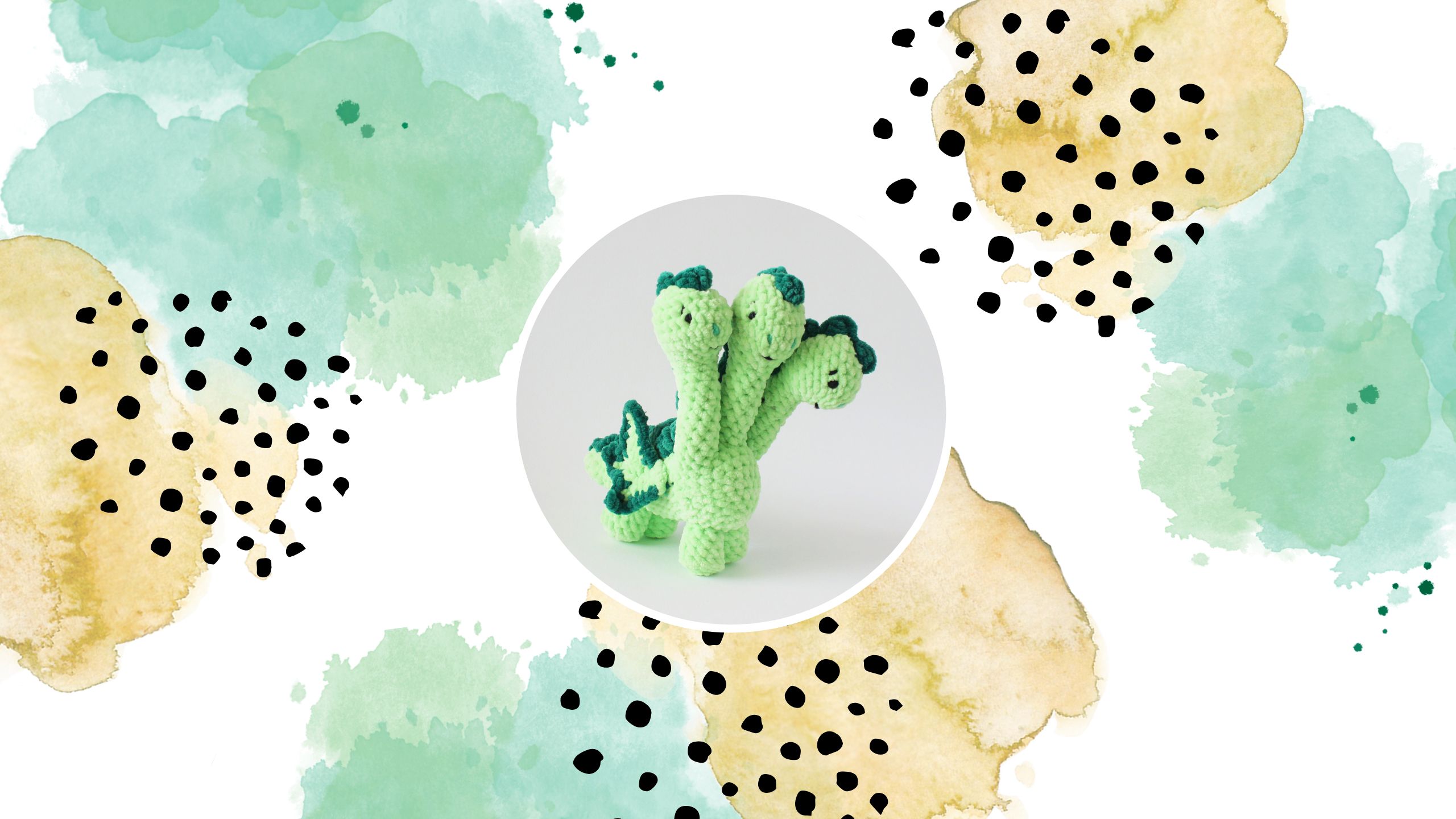
Based on the experience of the past years, the two camps of the crochet community there is One of the who loves chenille yarn and, another, who can't stand it. Although I enrich the first camp, and my samples suggest this quite strongly, however good to know if someone doesn't like chenille yarn or would like to make a small toy how to use my crochet patterns, so that its proportions are similar to the genial version. Because the look of a toy is largely determined not only by its color, but also by the proportions of the toy's structure, which changes if you make it in a different way in the pattern.

Photo: Own (Rebeka Novák-Szabó ev)
Yarns and patterns
The amigurumi and crochet pattern designers basically with their figures and creations they use one type of yarn, so switching back and forth between chenille and cotton is easier. What is important in this case is that the a suitable crochet hook should be selected. If the original pattern was written on a very thick chenille, the cotton will probably be very small, and making cotton patterns with chenille often results in a horribly large toy. This entails the fact that it is not certain that every pattern is lucky to be made with chenille yarn, or a pattern written on chenille with cotton.
As I wrote before in my own patterns, unlike most designers, I use two types of yarn. THE chenille yarnI love it because given by the game of the whole that a its softness, which babies and children love so much, a cotton yarnon the other hand, I add at to my samples so that a details better can be worked out, and the in order to develop sensory perception it is ideal for babies to encounter several different textures within a toy. In addition, there is often the advantage that a baby who is teething prefers to chew the part made of cotton.
So my patterns, which were basically written on chenille yarn, can also be made with cotton with a little change. Since I almost always use the same raw materials, changes that have been tried and tested for one sample already work for the other sample. Because of this I will show you how you can make your favorite patterns from me without using chenille using the already completed examples, and you can also think about yarn changes in connection with other designers' patterns.
Yarn change examples
First of all, I would like to use a simple example regarding the switch. Mina the cat (designer: ImakeYoumakeAmi)'s pattern is basically written on thin cotton yarn. When I saw it, Nicoleta said that she was looking for testers for the cat. I really liked the pattern, and since I wasn't selected, I bought it from her after the pattern was published. To be honest, I'm not a cat person, but these little cats are so funny that I couldn't miss them. When it was finished, I immediately saw in front of me that it would be really cute on a large scale! Here, the change from cotton to chenille was made very simply: instead of cotton yarn, I made the whole thing with chenille. I was happy when the designer also expressed his liking, how well the thick yarn suits him, and he liked it so much that he also crocheted it with chenille.
In connection with my own patterns, I also have two free crochet patterns that offer both versions: chenille and cotton. One of the my penguin pattern, another Pink duck pattern. THE I designed a penguin with chenille and then I thought about what kind of cotton I should try. I really like to experiment with patterns and yarns, so I also made the small version. There's the usual I used Schachenmayr Catania yarn instead of Himalay Dolphin Baby yarn, and even then I thought that the Scheepjes Cahlista originally used for the legs and nose could simply be replaced by crocheting the Catania with a smaller needle instead. Well, I don't have to say that my calculations didn't work out. That's why another type of foot was included in the sample for the little penguin, as the originally designed leg was too big for the smaller figure. Today I know how I should have tried a thinner yarn and a needle half the size. That is why the third version of penguin, where I changed the chenille to Drops Paris and originally parts written on thicker cotton with the thinner Catania I prepared it and it produced the expected result. In terms of proportions, it was just as cute as the genial one, only smaller in size. Based on this experience Rózi duck was designed with cotton. I used Scheepjes Cahlista yarn for the body and Schachenmayr Catania for the legs. After the duckling was done, I made the larger chenille version and I think he's also very proportionate and cute.
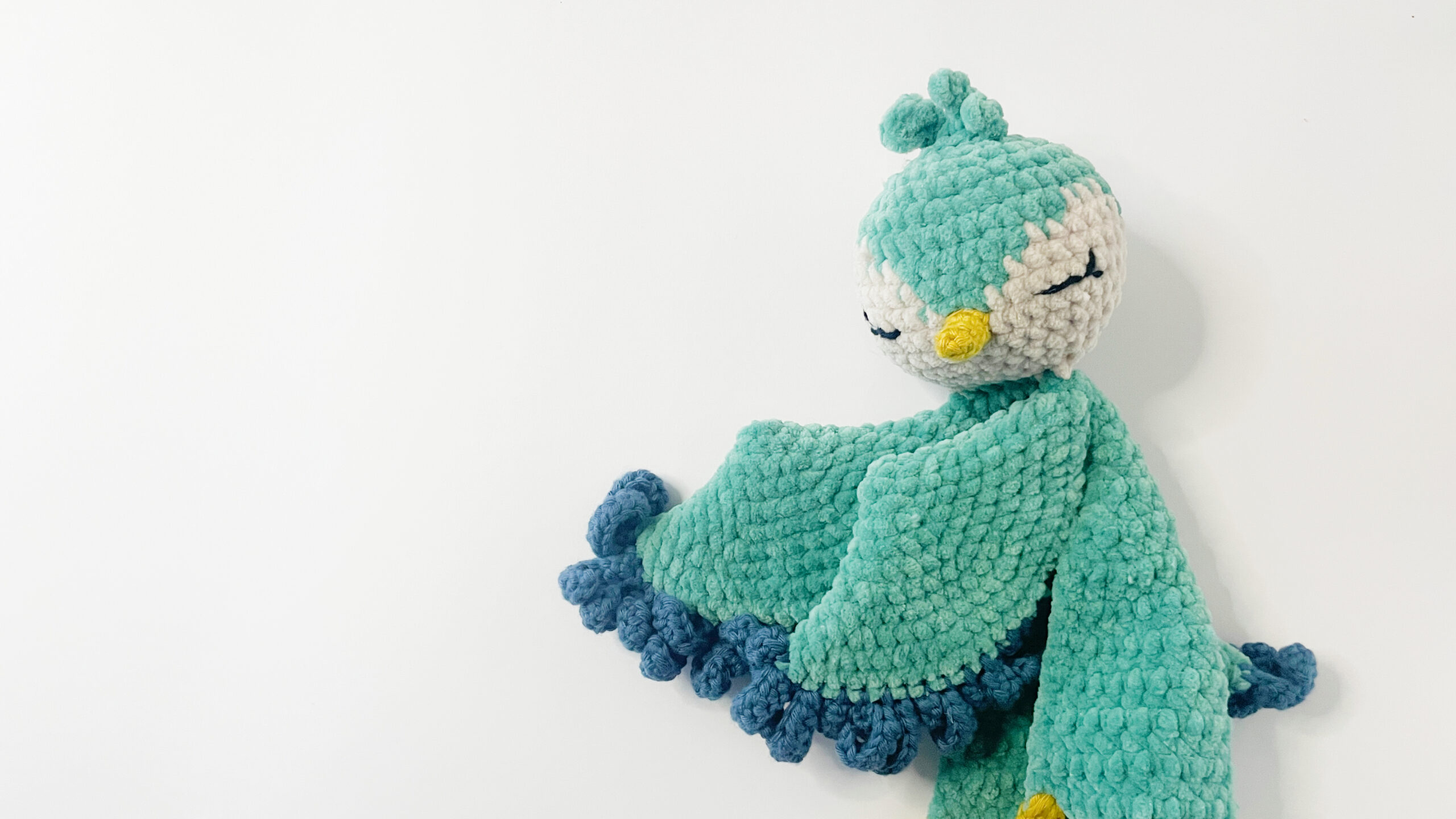
THE my latest attempt at with my butterfly nap scarf pattern happened, where the body of the large butterfly was made with Drops Paris, the wings with Himalaya Dolphin Baby. At the little butterfly the essence of the experiment was how to make it in such a way that the crocheter does not have to buy a hundredth type of yarn for his collection and can use the yarn of his favorite sport. For the body, I took the thread simply, and crocheted the chenille parts with double thread. By double thread, I mean that I took the same thread twice and joined it together during the crocheting, so it is better to crochet with two skeins for the sake of simplicity. The proportions are very similar to the genius, I was satisfied with the end result, although crocheting with double thread was not the most comfortable and made this part of the figure very hard. Probably, the next time I make a small sparkler, I will choose the thicker Drops Paris for the wing to get a similar result.
-

- amigurumi cat

-

- amigurumi penguin

-

- amigurumi duck

-

- amigurumi butterfly

Photos: Own (Rebeka Novák-Szabó ev)
Substitution and change of yarns
The conversions outlined above work for all my samples. Now I will summarize which yarns are similar sizes and how to switch between them. Basically, what you should look for when measuring the yarns is the weight and length, i.e. the ratio of grams to meters. In addition, the thickness of the yarn way of drifting determined, so this may not be sufficient information for an acrylic or a woolen yarn ag/m ratio. Even if I haven't listed your favorite yarns here, you already have a clue of what to pay attention to if you don't use the yarn specified in the sample, but your favorite.
Yarns of similar size
Yarn size and recommended crochet hook size* | What I use in my samples | Which can be substituted and/or mixed with my preferred brand |
100g/120m crochet hook: 4-4.5 mm | Himalayan Dolphin Baby | Yarn Art Dolce Scheepjes Chunky Monkey |
50g/75m crochet hook: 3-3.5 mm | Drops Paris | Scheepjes Cahlista Schachenmayr Catania Grande (it's a bit thicker), Retwisted Amigurumi Schachenmayr Catania with double thread |
50g/125m crochet hook: 2-2.5 mm | Schachenmayr Catania | Scheepjes Catona Puli Vlna-Hep Camilla Kartopu Organica (slightly thinner) Drops DROPS ♥ You #9 (haven't tried this yet, but probably good!) |
* depending on the tightness of the crochet, choose a smaller or larger crochet hook
I made a table, based on which you can easily change the yarns in my patterns: if you were to replace the chenille yarn with cotton, then the specified cotton yarn must also be replaced with a thinner one.
Yarn and size in my samples, recommended needle size | Substitute yarn size, recommended needle size | Example of yarn brands |
Himalayan Dolphin Baby 100g/120m crochet hook: 4-4.5 mm | 50g/75m crochet hook: 3 mm
| Drops Paris Scheepjes Cahlista Schachenmayr Catania Grande Retwisted Amigurumi Schachenmayr Catania with double thread |
Drops Paris 50g/75m crochet hook: 3-3.5 mm | 50g/125m crochet hook: (1.75-) 2 mm | Schachenmayr Catania Scheepjes Catona Puli Vlna-Hep Camilla Kartopu Organica Drops DROPS ♥ You #9 |
If you only made it with one type of yarn, then you can try it with your favorite sports yarn (50g/125m), as I did with my butterfly pattern. For the thicker cotton parts, take a single thread, for the chenille parts, take a double thread, so that the figure gets the necessary thickness and proportionality. You can also try this with other yarn, I think it is likely that with the right choice of crochet hook, the use of single-double yarn will also work with your favorite yarn. For patterns with different yarn types, it is always a good idea to keep the difference between the needle sizes in the original pattern, so if the pattern says a 4.5 mm needle for the thicker yarn, and a 3 mm needle for the thinner one, then use the same needle size difference, i.e. 1-1.5 mm needle smaller for the thinner yarn (e.g. for a 3 mm needle 1, choose a 5-2mm needle).
You can try my patterns with thinner and thicker yarn, if you are unsure and need help, feel free to contact me!
I hope you found this article of mine interesting, if so, click on the little icon at the top of the page!
Samples appearing in the article: Free Penguin Crochet Pattern; Free Duck Crochet Pattern; Butterfly Lovey Crochet Pattern