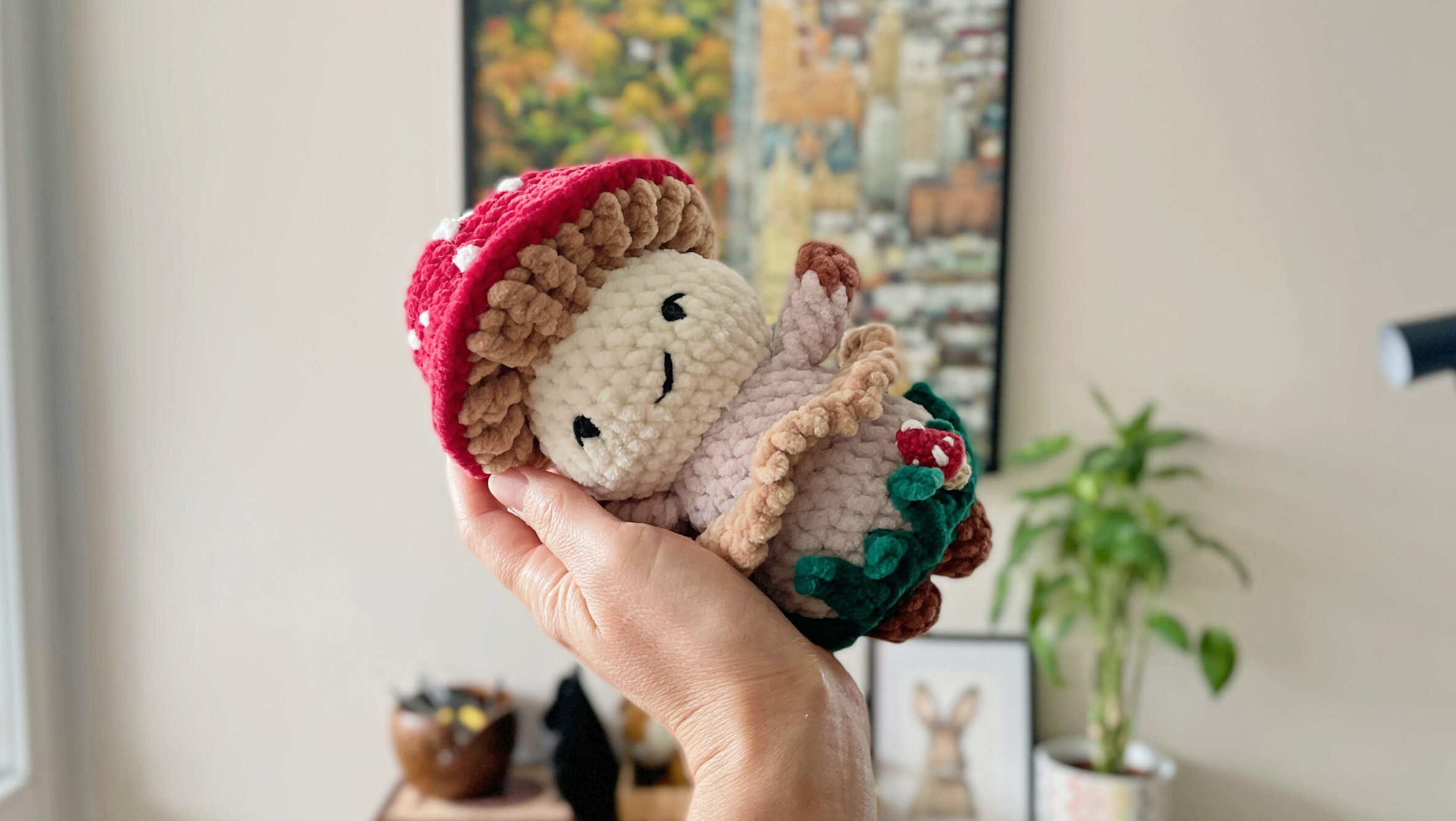
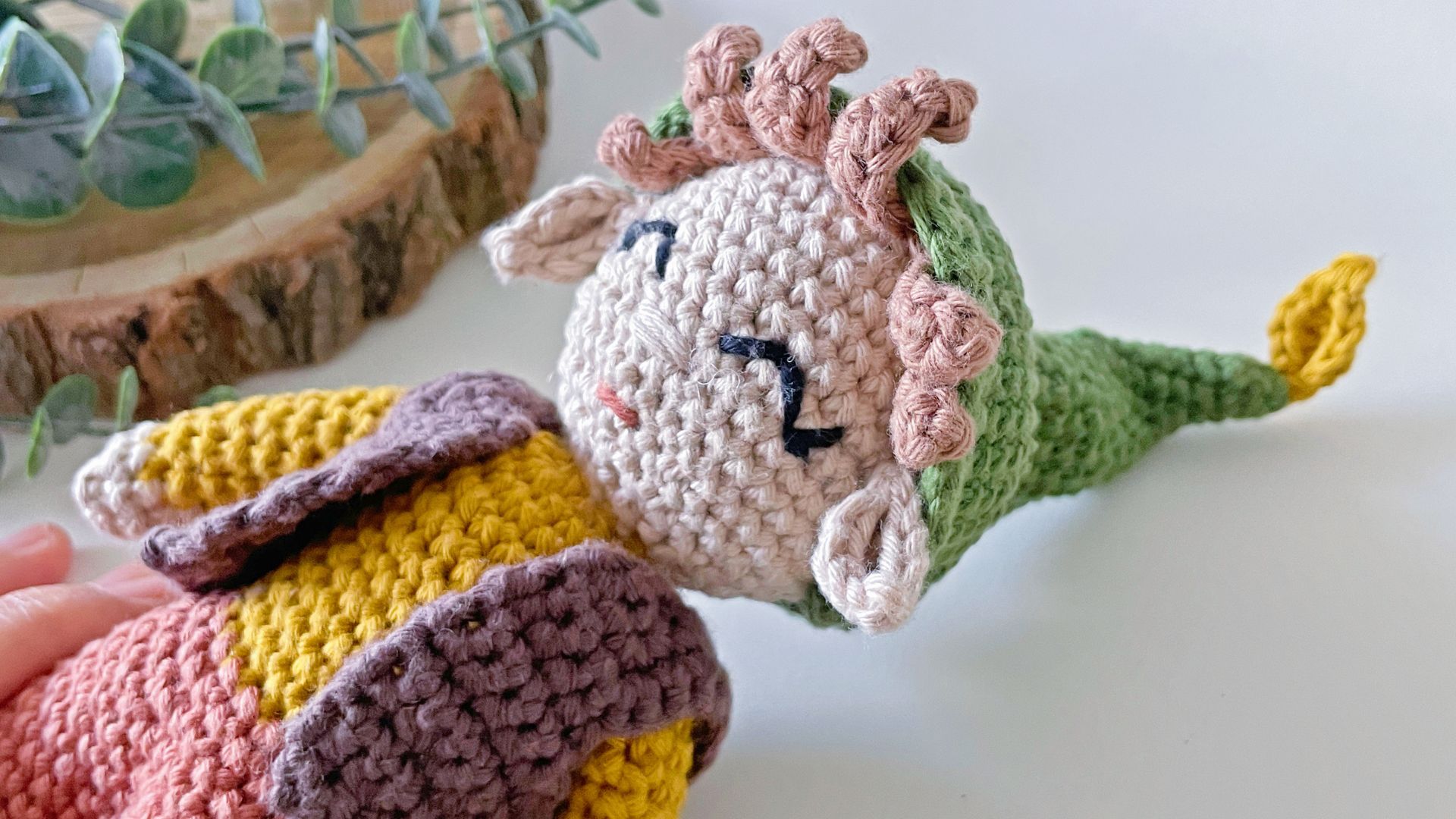
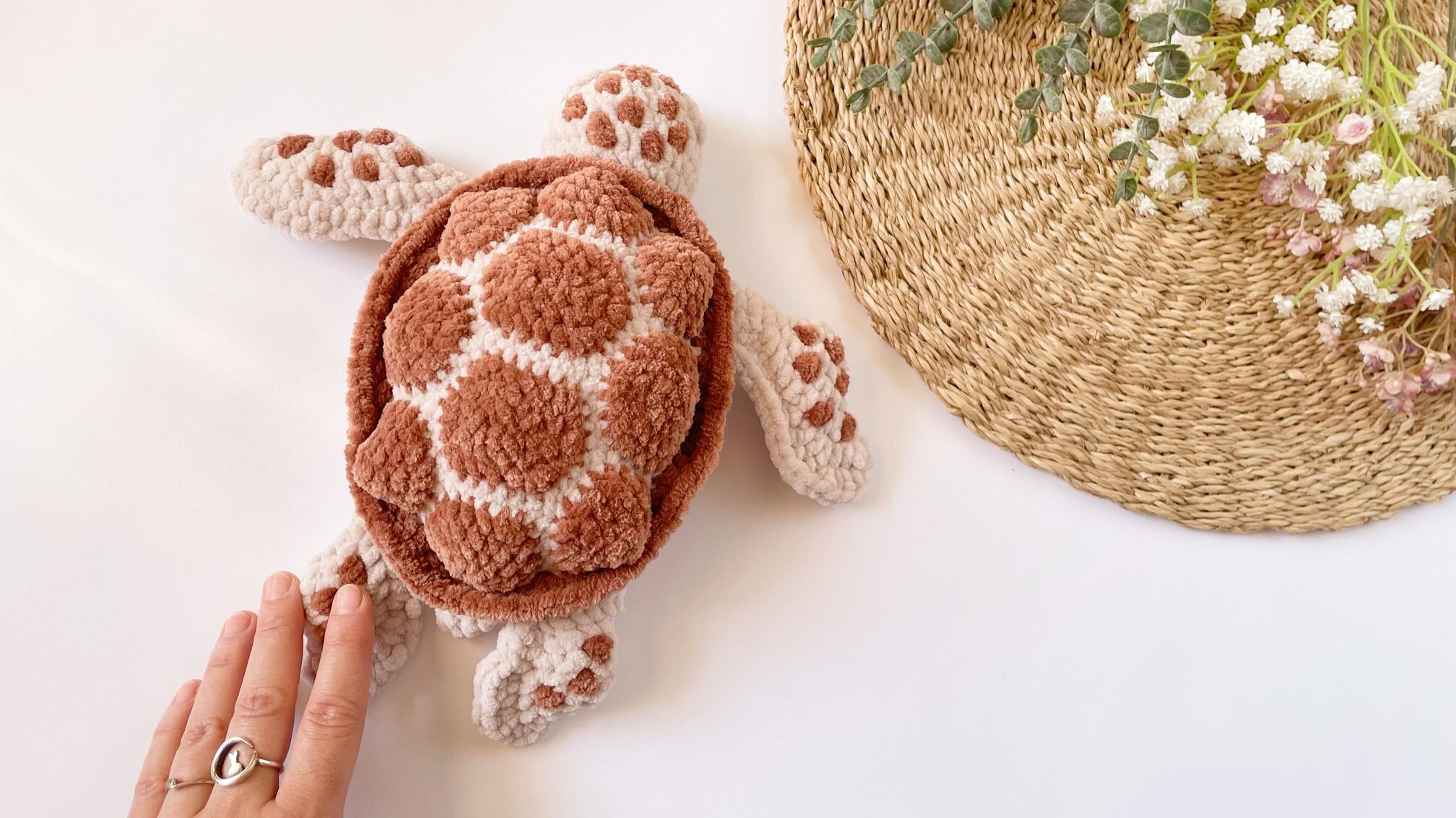
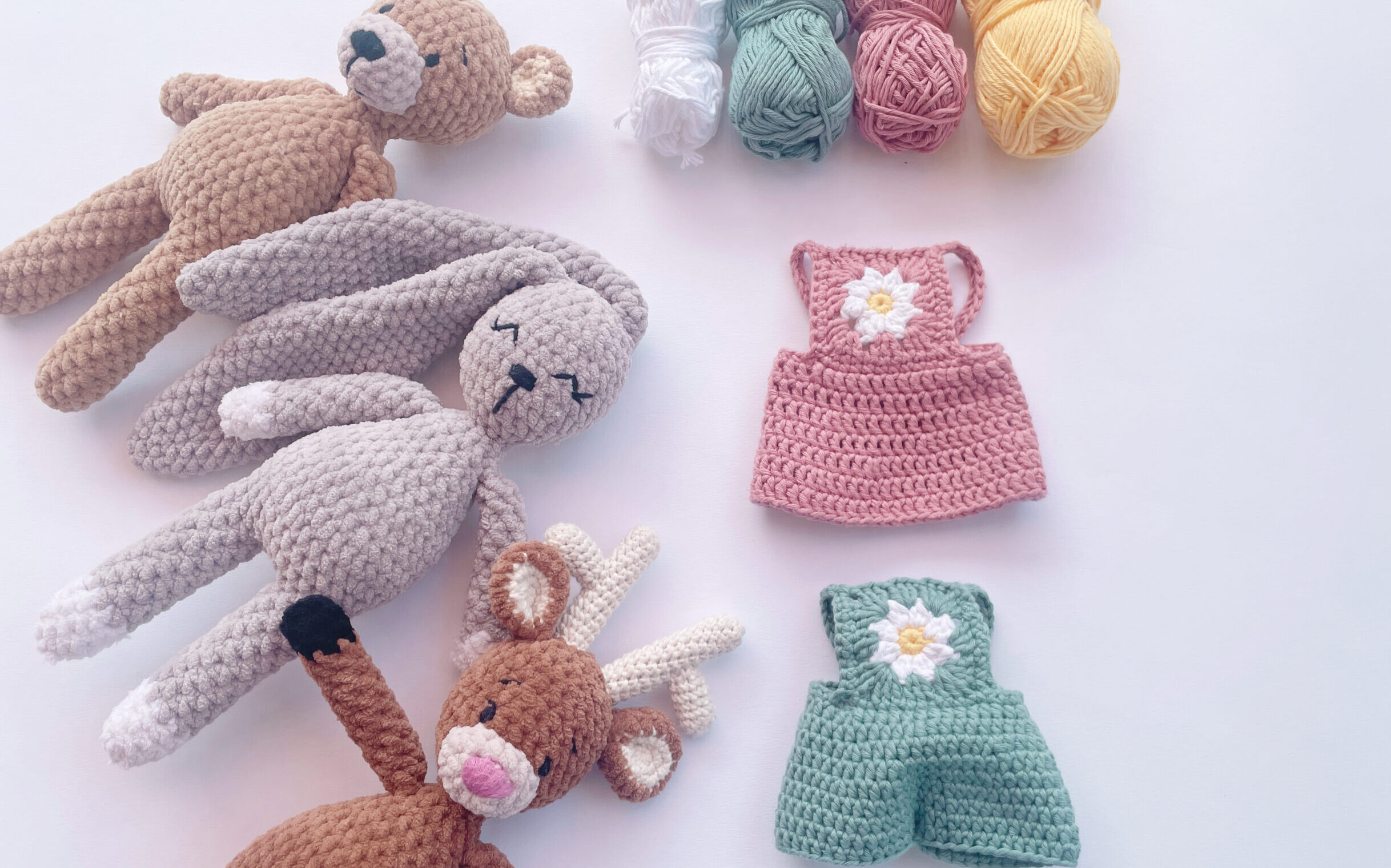
At the beginning of my design career, when I was constantly scrolling through Instagram in awe of all the beautiful creations, wondering how I could possibly crochet them all, I kept coming across the colorful characters of Yan Schenkel — better known by her artist name, Pica Pau. After a while, I could recognize almost all of her creations just from pictures. Even if I hadn’t seen a specific one before, I could instantly tell it was in her original Pica Pau style — which always turned out to be right. You could say her unique style is unmistakable, and it’s no surprise that the crochet world has completely fallen in love with her crocheted animals — without exaggeration.
But who exactly is Yan Schenkel, and why is any of her books an ideal choice for beginner crocheters? You’re about to find out!

Photo: Own (Rebeka Novák-Szabó ev)
Yan Schenkel, aka Pica Pau
Yanina Schenkel is arguably one of the most well-known and highly respected designers in the world of crocheted toys — a role model any crochet pattern designer would gladly follow in the footsteps of. The Argentine mother of three has turned every woman’s and child’s dream into reality: she has a hobby and career that not only she, but also her children — and from the looks of it, sometimes even her cats — enjoy. Over the course of her career, she has authored four books (I personally own two of them), and beyond that, she edits and contributes to crochet-related magazines. From what I’ve gathered, she has also held workshops across several continents, teaching hundreds of people the art of crochet and the craft of making amigurumi. Her work and Instagram account are followed by 229,000 people — no small number by any means. In addition to crochet, she has illustrated several books, including her own. One of the things I find most admirable about her is how strongly she advocates for copyright protection. Unfortunately, like many creatives, she has faced the curse of human greed — people have copied, stolen, and claimed her patterns as their own with only minor changes. Having experienced something similar myself, I can completely relate to what she must feel. I also believe this holds true in her case: anyone can copy, but creating something truly original is a gift reserved for the exceptionally creative — and she is one of them. One thing is certain: the world is richer not only because of her colorful crocheted characters, but also because of the love and joy that come with making and gifting them. Without Yanina, our world — and not just the crochet world — would be a little less joyful and bright.
Photos: Own (Rebeka Novák-Szabó ev)
So why is Pica Pau so good?
If you’ve ever picked up one of her books and flipped through it, this is no longer a question — so this is mainly for those who haven’t. I believe any of the Friends of Pica Pau books is a beginner crocheter’s best friend. At the start of the book, right after the introduction, it details the materials and tools needed for crocheting (and for making amigurumi — although she doesn’t like that term, so I’m consciously avoiding it in this article), beginning with the types of crochet hooks and their various properties, followed by the yarns in the same thorough manner. If you work your way through the first roughly 50 pages word for word, you’ll basically know crochet in theory. Of course, we know it’s not that simple, but after presenting yarns and other essential tools, the book moves on to the basics of crocheting, which a beginner can easily study and master step by step, thanks to very clear photo illustrations showing the process. Honestly, if I had known back then that there was a book where I could find everything — and I mean EVERYTHING — in one place, I would have saved myself tons of time spent searching and puzzling over terms I couldn’t understand, like “what exactly is V and X crochet???” Yes, you’ll find that in the book too. As I said, even as a beginner (and I dare say even as a more experienced crocheter), you can learn a lot from Pica Pau. Beyond the basics, she shares tricks about embroidery, sewing, working with threads, and basically everything you need to know when making crocheted toys. And that’s just the beginning — you haven’t even started crocheting one of her figures yet, where you’ll truly absorb the most knowledge.
Photos: Own (Rebeka Novák-Szabó ev)
Pica Pau Crochet Patterns
In every book of the Friends of Pica Pau series, you’ll find 20 crochet patterns. This is a very good deal, not just for beginners, because for less than 6,000 HUF (2024 prices) you get 20 great crochet patterns and an instructional crochet book. It’s especially ideal for those just starting out, as buying the book doesn’t involve sky-high costs, plus you easily get all the information you need to get going. If you’re careful when buying yarn, you can start by purchasing only the materials needed for one figure, so a beginner’s crochet kit can be put together for under about 15,000 HUF (2024 prices). I think if someone truly wants a new hobby and has chosen crochet, this is definitely a good offer. Thinking about it, you probably wouldn’t even get a decent beginner running shoe for that price. That said, I want to cautiously note that the price per individual pattern in a book is much cheaper, since Pica Pau’s books are published worldwide in several countries and languages, making the prices far more favorable compared to individual patterns. However, if you visit Yanina’s Etsy shop, you’ll find similar prices to other crochet pattern designers’ shops. Since the books are more widely available in multiple languages, but individual patterns have a narrower buyer base, prices differ significantly. I wanted to emphasize this so beginners understand why individual patterns are more expensive compared to package deals or books.
But back to the nitty-gritty of finances and the crochet patterns. At the end of the instructional section in Pica Pau’s books, you’ll find a page showing all the figures on one page. At first glance, you can immediately see how thoughtful, detailed, and well-crafted these figures are, with every detail having its place. Then, the crochet patterns follow one by one, each with a similar structure. Personally, my favorite parts are the stories woven around each animal by the author. While crocheting each figure, I imagined the stories were true — like Gertrude being an archaeologist, or Robin the unicorn growing up with wild horses in the Himalayas. Of course, I share these little stories with my kids too, and at home we call the figures by their given names (except for the dragon — he’s Sophie at our place). After the stories, the book indicates the skill level needed, size, and materials for each figure, then breaks down the creation process step by step under chapter headings.
Photos: Own (Rebeka Novák-Szabó ev)
What has Pica Pau given me?
I’ve gained so much knowledge, techniques, and inspiration. Motivation. A desire to create. Respect for the work of others. And a dream whose realization is still waiting. I thank Yanina for all the tricks I’ve learned from her and for helping me bring to life the figures I imagined. I’m grateful for the many happy hours spent crocheting and for my endless stash of Drops Paris yarn (since I almost always crochet her figures with this yarn), which I stocked up on so I can make all her creations. Thank you for showing me what tapestry crochet is like, how awesome it is when animals have accessories (hats, scarves, gloves, (half a pair of) shoes), and for setting an example of how to create well-crafted, clearly written patterns. So, I thank her (or you, if you’re reading this) for everything!
In the section below, you can see the availability of her books that are also accessible in Hungary, as well as my two copies, from which I have already crocheted 15 figures over the years, with the rest waiting to come to life and find a place in our toy storage basket.

Photos: Own (Rebeka Novák-Szabó ev)