Nowadays, new designers emerge every day in Hungarian and foreign groups and show their own creations. Recently, however, there has been an increase in the number of crocheters who call themselves designers, who do not actually work from their own source, and who want to adorn themselves with the pen of another designer, or worse, make a profit. The events of the past week also motivated me to present to crocheters, based on my own experience, that what actually consists of designing a crochet pattern. At the end of the article, I will also discuss in which cases the crocheter cannot be called a crochet pattern designer.

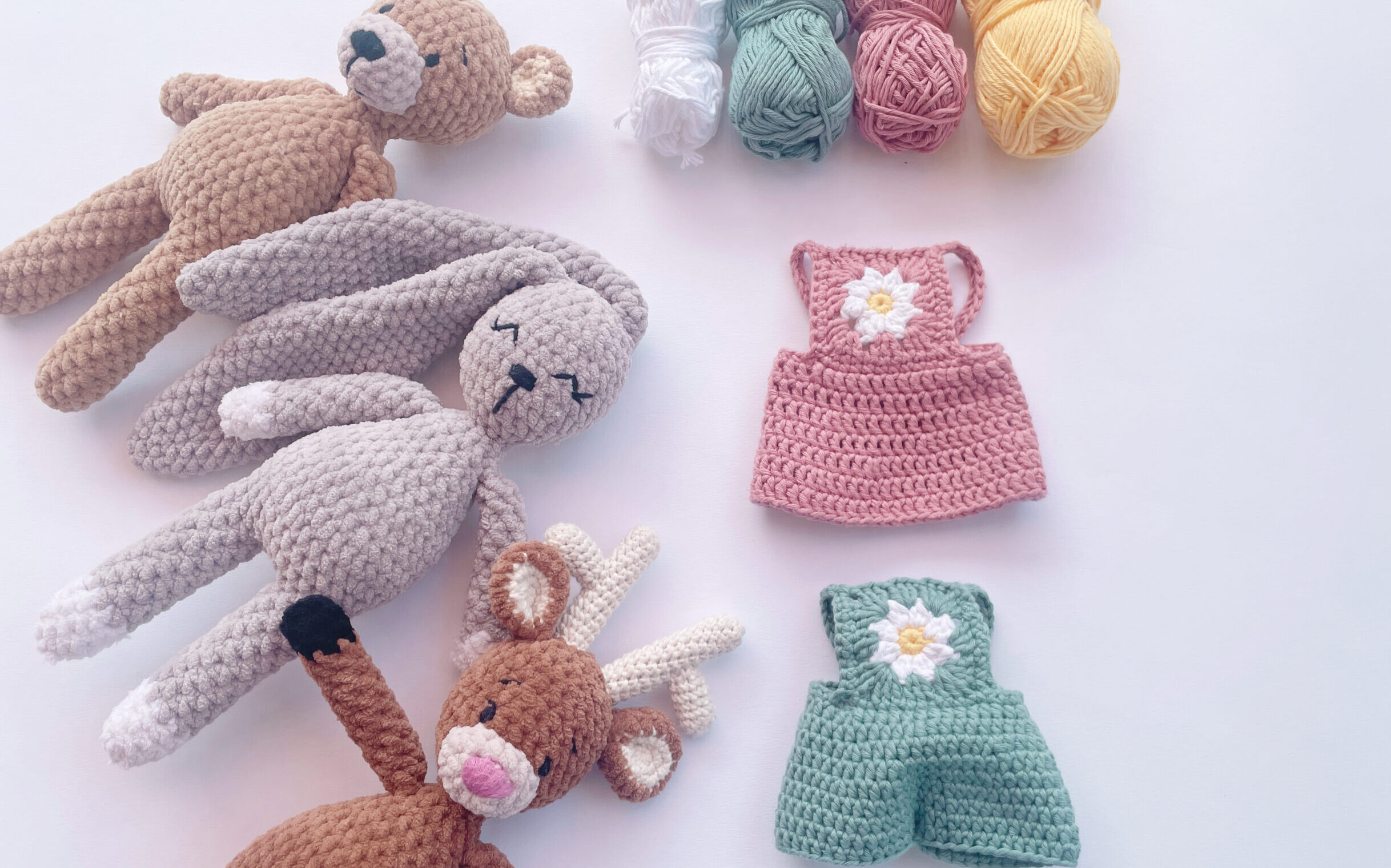
Photo: Own (Rebeka Novák-Szabó ev)
First step: Unique idea
Designing a crochet pattern always starts with a unique idea. Inspiration can come from events in our own lives, from processing our past, or simply an idea comes across on the street that sets off a creative wave in us. Through a few examples, I will show what inspired me to design over the past years.
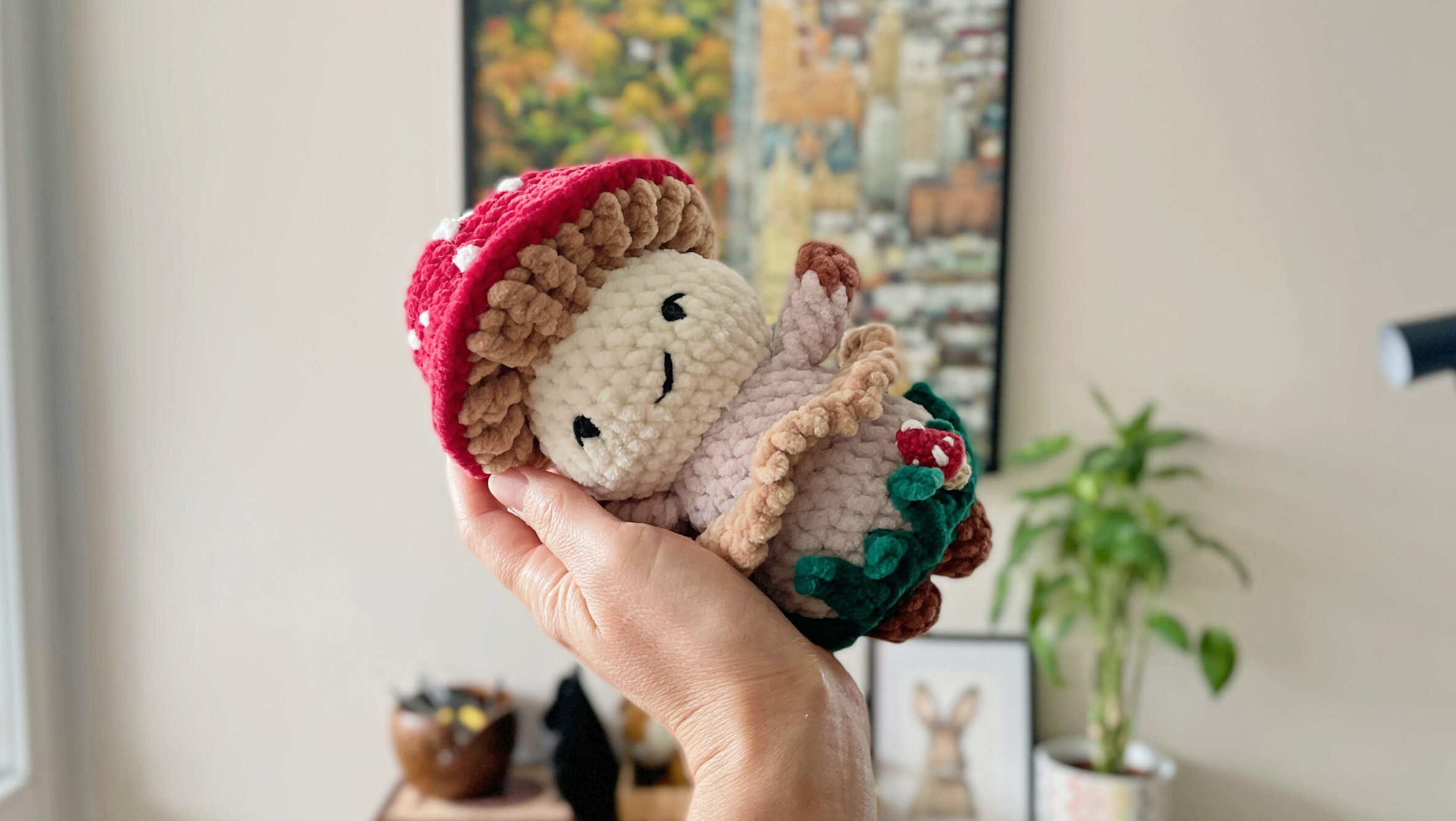
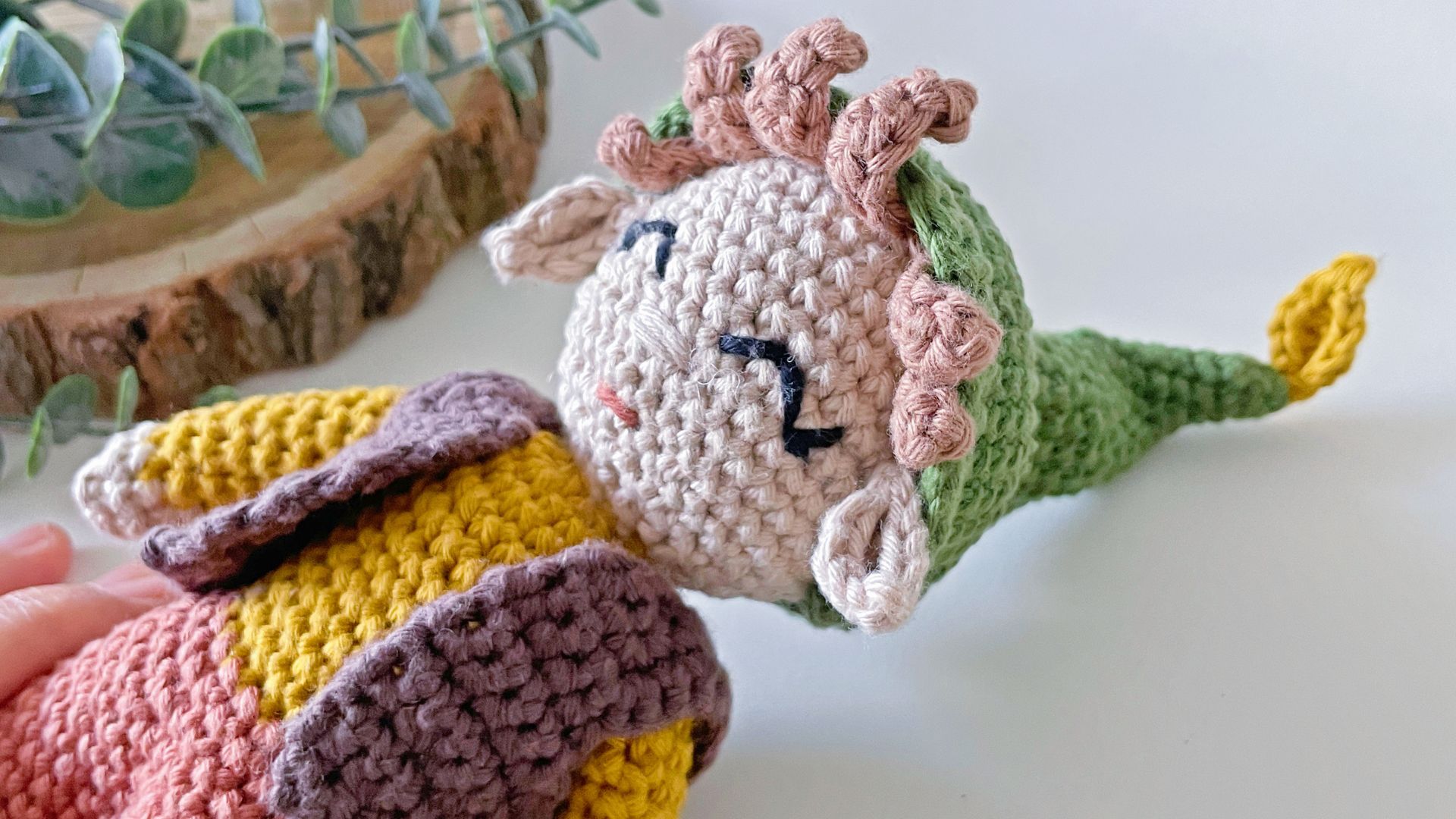
At my place ideas usually come from spending time with my children: like Hurka, the cylinder pig, who took shape during a kneading session, or Reka Beet and butterfly patterns, who were born during a joint drawing. The inspired by my life events for example the Snooze Bunny, because when I was expecting my little son, the pattern of this nap scarf was also conceived and it carries all the motherly love and anticipation. The lion patterns I designed it for an old friend of mine, whose mane evokes curly curls. Since the person is a big Game of Thrones fan and one of his favorite characters was Tyrion from the Lannister house (a lion is the symbol of the house), this is how the lion gave himself. THE lamb patterns and Rosy duck they recall my past. When I was a child, we got a lamb for Easter once, which was a great experience. I am amused by an inaccurate copy of my best childhood friend's teddy bear, which I also really liked at the time. THE fox patterns and Peti Kócos for example, it is made for children. My nephew had a big fox season, so I designed the fox for him for Santa. And the tale of the little sparrow in our flock is a family favorite, so I wanted to see this character in a three-dimensional form. THE paper pocket holder pattern it was described - although, as I write in the pattern, it's actually a preparation guide, a suggestion, not really a pattern - because I had a textile paper pocket holder similar to this, which I really liked, but left somewhere. This is also partly related to my worldview, since I am committed to sustainable development and environmental protection.
As you can see, really anything can bring an idea that can be implemented later. However before you start implementing your idea, look through the crochet patterns, whether in Facebook groups, Instagram, Pinterest, or the Google search engine, as it is entirely possible that the idea you came up with has already been implemented by someone else. With this search history, sure we can save ourselves and other designers from a lot of inconvenience, and we are not labeled as stealing ideas and samples for our own profit.
If you haven't found a work or crochet pattern similar to your idea, then start planning and make your (first) unique crochet pattern.
Design phase: From idea to implementation
As many designers, as many habits, as they might say in crochet circles. Because everyone thinks differently, so ideas can also be implemented in several ways. Some people, including me, they start the design with a sketch, where the proportions of the figure, the colors and materials used are recorded. It is all helps with the actual crocheting, because you don't have to figure out what to do on the spot, but we can implement the ready-made idea. Of course, this does not mean that an accessory or element cannot change in the meantime, but it is bases are all prepared before crocheting.
There are those who work entirely from their imagination, it is not necessary for them to draw it before, only the they rely on their creative energy and shape the entire figure intuitively, from the beginning to the end. Same with this method there is a risk that, compared to the previous method, the designer will break down the figure several times, however, what is good about it is the design it will also be a surprise for him at the end and the joy is complete.
Design requires not only basic crochet knowledge, but that is the minimum. Even with simpler figures, it is worth using tricks or techniques that can make your figure unique. For me, it is very important that crocheters can learn new things from my patterns and improve, especially if they are beginner crocheters! In this way, you will not only be enriched with a nice figure, but also with technical knowledge that you can use in your next projects. Basically, more complex patterns require more complex technical knowledge, since to create a shape or to crochet a shape, you definitely need the experiences that only those who have been crocheting for a long time possess.

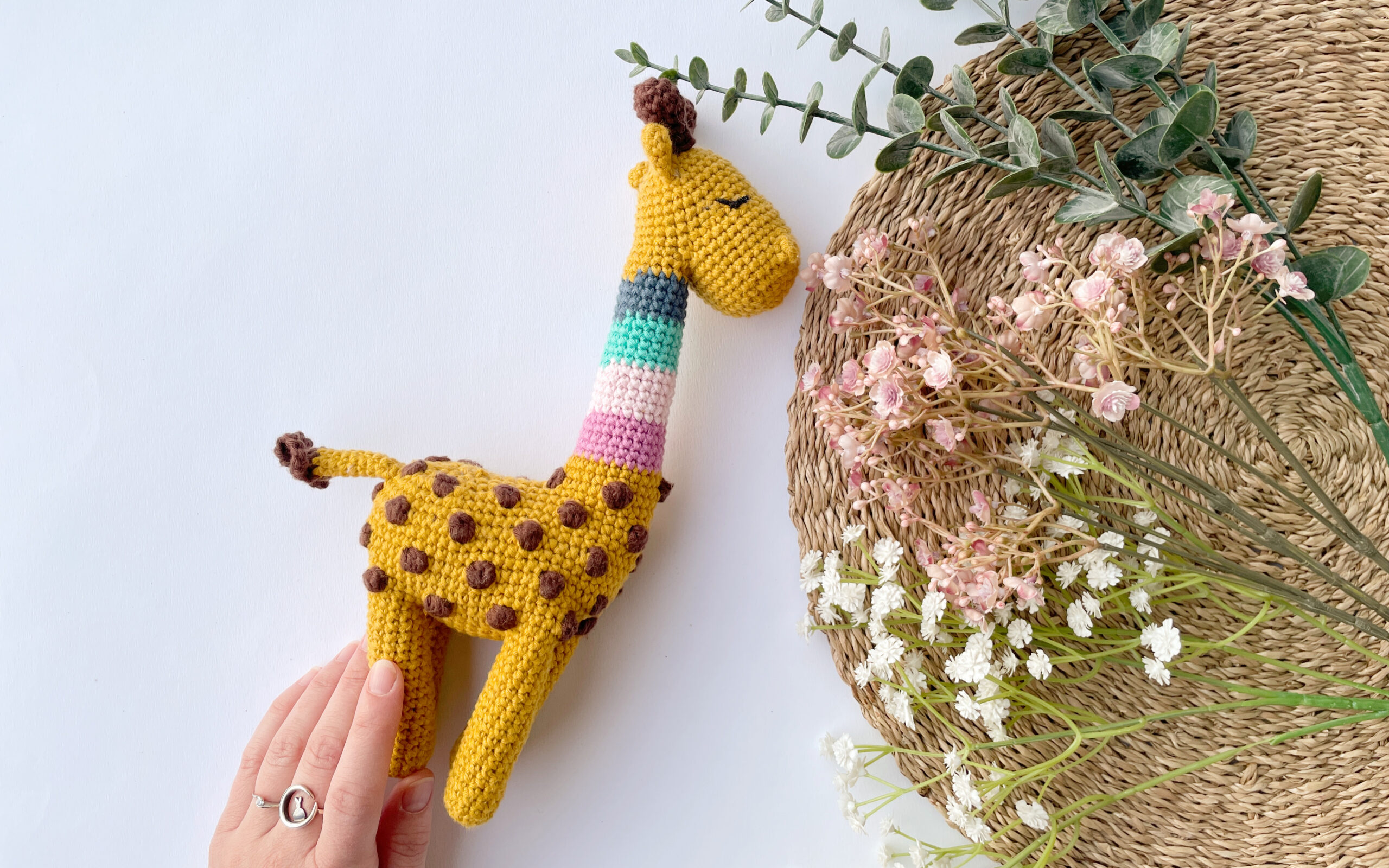
Photo: Own (Rebeka Novák-Szabó ev)

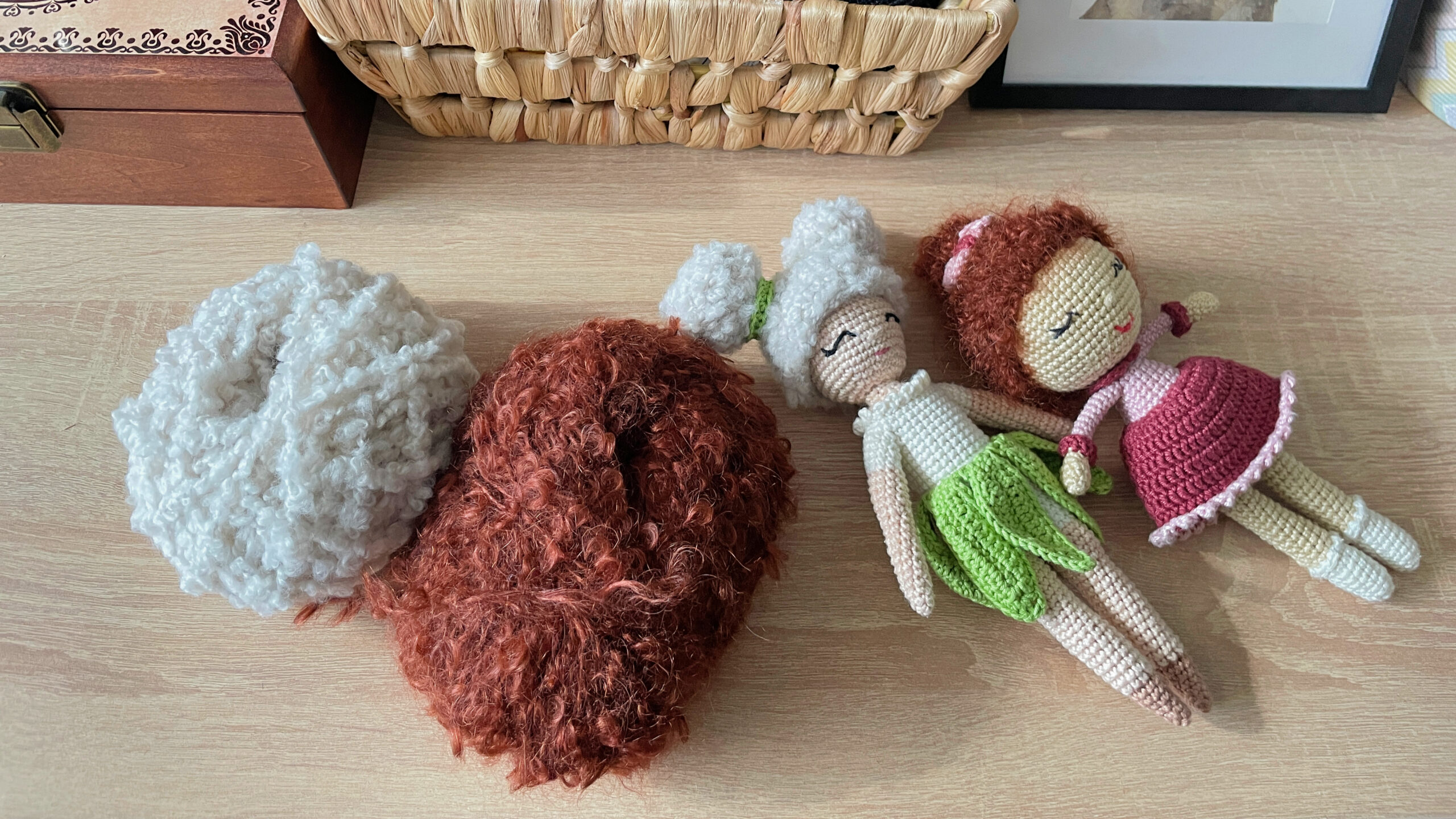
Photo: Own (Rebeka Novák-Szabó ev)
Sample writing section: How does a figure become a sample?
Fixing a crochet pattern also depends on the individual, it depends on the designer which solution he chooses. Who is text editor some people use it Canva website/application, and some video samplesat, records the steps in subtitles for the crocheters. Personally, me In Power Point I usually write my patterns, as I can set it there so that the crocheters can (also) jump to any point of the pattern with references. Of course, there are countless other ways to record a sample, which should not be missing from any pattern: the clear instructions, visual assistance (especially for beginner crocheters), especially if we want to sell our sample.
Pattern writing also varies from designer to designer - we talked about this among ourselves quite a few times, about who used it and how. It can be said designers are divided into two camps in view of: vthe one who crochets the figure first, then crochets another piece of it to make the pattern, when you make the phase photos, videos, diagrams, and some people already do all of this during planning, so as the figure is formed, the pattern is already being made. For years I was a columnist member of the first camp, because every time I impatiently wait for the figure to take shape, so I don't like to bother with taking photos and videos during the creative process. However with this method it can be very long to make a pattern, moreover, I don't always have the affinity to crochet the same figure again, so this part of the planning often went/is going without a hitch. This is why I switched recently for pattern writing during design, since with this some I can save time - of which there aren't too many lately anyway - and I trust in my motivation to see the finished figure as soon as possible. The pitfall of this is that many times when I was crocheting the second figure, I saw better what pictures and videos were needed, so it's during the process of making a sample during the design that it occurs to me while typing that a photo/video could have been made of this. In such cases, I usually consider how important it is in the preparation, and if I feel that this, e.g. the crocheter will be able to bridge it with another crochet tutorial video, then I'll let it go. On the other hand, if I feel that it is cardinal in the creation of the figure, then the dismantling and re-crocheting (wherever one holds the figure) can certainly be done.
If you have the figure and the figures are ready, all that remains is to type in the pattern. There are those determined designers, who already write it step by step during the design, so that by making the figure, not only the illustrations/videos, but also the pattern itself have been effectively completed. Unfortunately, I'm not there yet, but this is the direction I've set for myself, since this way the designer can save himself from the previously mentioned inconveniences, and in addition, once the figure is finished, there is no burden of having to sit down now to type. I think so I can confidently say that none of the designers are his favorite, but when the pattern is ready, the fact that we gave the crocheters the opportunity to create something new and give them joy always fills us with pride.
If the figure is finished, pictures and/or videos are available, and the written (either electronic or paper-based) version of the crochet pattern is ready, then we are almost at the end of the story. Which is a crochet pattern the designer also sells his designs abroad, in different languages, there is even a translation task involved, which you either prepare yourself or have a professional translator do. At first, I translated it myself, but I was not satisfied with the quality, so I entrust this part to a professional translator, in order to achieve guaranteed customer satisfaction.
Testing a crochet pattern
Testing can come after the sample is made! This is not relevant for all samples: especially if it is a very simple figure, it is not absolutely necessary, but if we have not come up with something very basic crochet surely the designer should crochet his new figure with testers. During testing, I often feel bad if the testers find an error - and there has never been one that didn't happen - but if my customer informed me after the sample was issued that he found an error here and there in the sample he bought, that would be very unpleasant. I would feel I would probably sink underground in a bit of shame. I like to make sure that I deliver quality work, I would not consider it fair if my mistakes were corrected by the first customers.
Testing usually starts with the testing call or the designer visits his already proven testers to crochet the pattern. If we test publicly, i.e. we publish a call for testing, I think it can be announced to a first-round advertiser. In this way, crocheters can be informed that there will be a new pattern on the horizon, and in addition, I think it is a nice way to keep in touch with other crocheters. We may even get to know these people during the testing process, and later we can establish a closer relationship with them. Selection of testers starts after testing period, when the crocheters crochet the new pattern by the deadline and indicate if they found an error in it. I previously wrote an article about testing, if you are interested in more detail, read it.
When the testers have finished and the designer has corrected the errors in the sample or supplemented it upon request, the next step can be taken.

Photo: Own (Rebeka Novák-Szabó ev)
Selling and advertising crochet patterns
As the title of the chapter suggests, the designers' work is far from over with the completion of the sample, by testing. Once you have the tested sample the finished figure must be served to the crocheters, and as you have experienced, most of the designers make high-quality, teaser photos and videos of the new design. Personally the product photos, which later all a webshop, like that Etsyare uploaded to I take it with a professional camera, which I was able to master at an acceptable level during the first year. I spent a lot of time taking photos and trying settings, and at first it really annoyed me that I was wasting my time instead of crocheting. But hey the life of designers is like this: 90% running a business 10% crocheting. With the completion of the professional photos the product data sheet is written by the designer on the sales interface - paying attention to search engine optimization, because otherwise the dog won't find the pattern either - then she will present to the public the appearance of her new crochet pattern. Of course, the product before its appearance designers are used to announcement posts to make - such as the testing option - that the sample will appear soon.
If the crochet pattern has been uploaded to the sales platform (webshop, Etsy, Ravelry, etc.) and the designer has informed the crocheters that it is available, the new crochet pattern can only lean back a little. During or after the release of the sample, some designers used to announce prize games, so that their example can be spread in a larger circle, and also afterwards During the lifetime of the business, different marketing tools must be used to draw attention to the crochet pattern.

Photo: Pexels
After its release, the power of the novelty has an effect, and many crocheters may acquire it in their crochet pattern collection, however, as I wrote in several articles before, every designer needs something to sustain their business. THE revenues must somehow cover the expenditure, moreover, I didn't even mention the profit here. By default, a monthly cost of HUF 100,000 should be calculated, if someone carries out his design work as an individual entrepreneur, but this is the lowest level. If you want to invest in your business, develop and improve it for a better customer experience, or for your own convenience (e.g. don't have to issue invoices one by one, as this also takes time away from crocheting), then these costs will increase. Moreover In Hungary, the forms of taxation are not very favorable either, so if you do the activity full-time and not as a KATA employee (you cannot sell abroad with KATA taxation), then you will certainly spend more than half of your income on taxes and contributions. I will write an article about this later, if there is a need for it, which you can indicate by e-mail, message or any of my contact methods. So, you can only run your business from income, like this if a single crochet pattern is only useful for 1-2 weeks, then we either get into a rather depressing, creativity-killing spiral and embark on the path of constant planning. In my opinion a pattern is much better, i.e. the product, its lifespan is longer, months or even years, or it flares up periodically, because so we have time to leave room for our creativity and we don't push ourselves too much.
I hope that in the above I was able to convey to all crocheters how much work we have with each crochet pattern, and those for whom it was not clear until now that why does a crochet pattern cost HUF 1,500-2,500. The one outlined above due to invested energy, I do not support large % discounts (maximum on very special occasions), or the huge sample packs at a cheap unit price, as I believe that by me blackened work into these documents cannot be sold at such a price. I also think so who usually gives crochet patterns below the normal market price, either one of the steps is missing, or the person is not working from his own source. Obviously, people give it cheaper with a lighter spirit, as if it were a crochet pattern for a completely unique figure made from the heart and soul.
The dark side of planning: fraud, theft and other nefarious things
As many of you have already heard, in the past few days it has come to light several times that some of my patterns are being sold by other foreign crocheters (my former customers, by the way) as their own. This is very painful after the above work is done, and it is sad that someone else is benefiting from the designer's hard work, heart and time.
So what is NOT design? As before in my copyright article I also wrote cannot be called a designer who:
- he creates his "own" pattern by cutting the patterns together
- someone who is another designer, modifies it a little on an existing pattern (adds a few stitches, or colors, or possibly accessories, or crochets it from a different type of yarn)
- crochet the given crocheted toy or object from a picture
- uses artificial intelligence for design (unfortunately, I have seen several examples of this in the past and I was completely shocked at how certain crocheters degrade creative work)
Of course not everything is black and white here either, which it sure is in all cases, attention must be paid to copyright - e.g. if you are crocheting a cartoon character, you need to find out whether the dreamer of the character agrees, whether it can be made. Personally, this is also why my patterns are free, for which the inspiration is a figure created by someone else, in a different way, because I don't want to earn money from someone else's idea (the designer's opinions differ on this as well).
So the "design" methods listed above are all scams in my opinion. The pattern will not be unique, it will not be realized based on your own idea, so the crocheter will rightfully get the "copycat" stamp.
For the former, theft of a crochet pattern is a more serious crime with legal consequences. What can and cannot be done with a crochet pattern has already been explained by the you can read in my article about copyright, so I would not go into the details of this. But that deeply upsetting and sad, that there are crocheters who believe that after purchasing a pattern, the given pattern can be sold freely, or shared for free with a larger crowd, with people they don't know. Obviously, there have always been and always will be malicious people. Ebecause of this, I would ask the lovely crocheters who know (already) the energy invested in the design, that if they come across such a fraudulent act anywhere (Facebook, Instagram, Pinterest, etc.) to immediately report it to the designer of the original pattern, so that you can take your own copyright-related steps. Even if fraud and theft cannot be prevented, I believe in the power of community.
The list of other vile things could be long enough, but I would still highlight one or two things. I think so it is very thought-provoking that a designer is usually "inspired" by other designers, or even before the release of the other designer's model, he releases his own version (because, for example, the other designer shared his phase photo with his audience, starts designing the figure at the request of his followers, or otherwise obtained information about what the other designer is working on), thus (in my opinion) to the detriment of the designer's partner. Of course, there are coincidences, the community is quite large, many designers make crochet patterns, so there are many times that designers come up with similar ideas. Although I will add at this time - so far - we have been considerate of each other, and the samples were published at different times. I believe that if someone has too many of these coincidences, it is not a coincidence, rather, he exploits the creativity of others for his own financial and other interests, and this is not a likable quality no matter how I look at it. In addition, what I am still very much against and do not consider to be planning we create and publish our own version on the same basis that others have invented before. By adding our own taste world and imagination to a basic body, we will not have our own pattern and our own idea, so I find it extremely incorrect and unfair if someone sells such a pattern. But I believe in fate and that those people who indulge in such vile things will surely one day (perhaps in another area of their lives) get back the bad things they did to others on purpose.

Photo: Pexels
Final thoughts
I think the topic and actuality of the article have become extremely important recently, as many people discover the self that wants to create in themselves, who wants to make the world better and happier with their creativity. With this article, I wanted to draw the attention of the crochet community to the fact that how much work is involved in the design and the business behind it (in fact, he exposes a full-time job). My article it is also partly intended for those crocheters who recently want to turn their heads to design. SI would like them to see clearly the work behind the design, the way of fair/honest design and also the dark sides of the design.